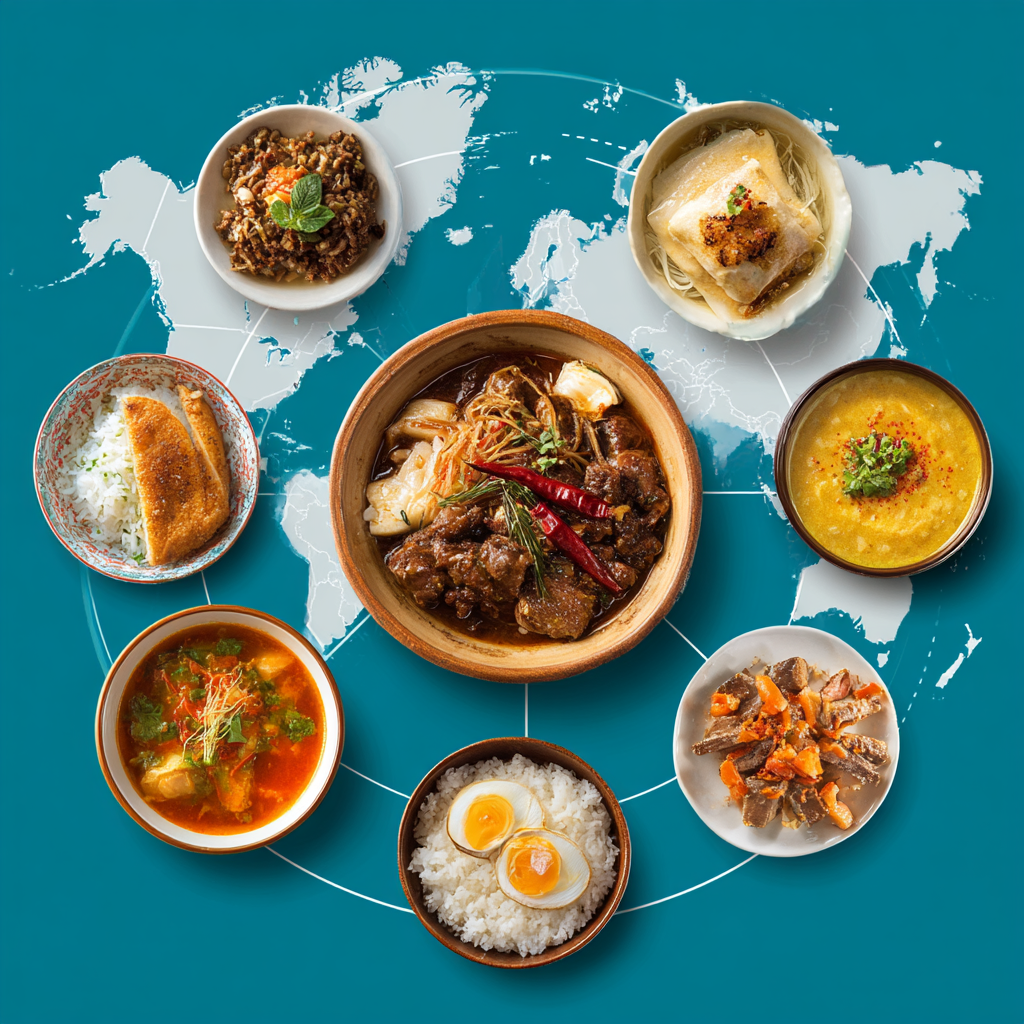
Australian cuisine is often introduced through a familiar question: what is the national food of Australia? At first glance, this seems like a simple way to understand the country’s culinary identity. Most nations are expected to have a recognizable food tradition, a stable list of dishes, and a clear historical narrative linking cuisine to national character. But Australia does not fit this model comfortably. Its food culture is real, distinctive, and increasingly influential, yet it is difficult to define through the usual idea of a national cuisine. A better way to understand Australian food is to see it as a system of cultural borrowing — one shaped not by purity or continuity, but by adaptation, layering, and reinterpretation.
This does not mean Australian cuisine lacks character. On the contrary, it has a very clear logic. The problem is that its logic is not based on culinary isolation. It is based on exchange.
One reason for this is historical. Australia’s food culture developed through migration, colonization, trade, and changing patterns of settlement. British influence provided one of the earliest frameworks for everyday eating, especially in domestic cooking, baking, and meal structure. But British foundations never remained untouched. Over time, they were modified by local conditions, different climates, available ingredients, and the arrival of communities from Asia, the Mediterranean, the Middle East, and many other regions. These influences did not simply sit side by side. They blended into the everyday reality of how people cook, order, shop, and eat.
That process matters because it changes what cuisine means. In some food cultures, identity is protected by continuity. In Australia, identity is more often produced through incorporation. New ingredients, new techniques, and new taste preferences are not always treated as outside influences. They become part of the mainstream surprisingly quickly. This creates a cuisine that feels flexible rather than fixed.
The role of Asian influence is especially important here. In contemporary Australia, it is almost impossible to talk honestly about everyday food without acknowledging the deep presence of Chinese, Vietnamese, Thai, Japanese, Malaysian, Korean, and other Asian culinary traditions. These influences are visible not only in restaurants but in home kitchens, cafés, supermarket shelves, and casual eating habits. Rice, noodles, dumplings, soy-based seasonings, chili-driven flavors, broths, and shared-plate dining are not marginal or exotic additions. They are part of ordinary food culture.
The same is true of Mediterranean influence. Italian and Greek food traditions, in particular, helped shape modern Australian ideas about produce, olive oil, coffee, pasta, grilling, seafood, and relaxed communal eating. What many people now perceive as normal urban Australian food culture would be difficult to imagine without these imported traditions. The café culture that defines so much of modern Australian city life is itself inseparable from migration and borrowed habits that were naturalized over time.
This is why the language of “borrowing” is more useful than the language of “influence” alone. Influence can suggest something temporary or external, as if a cuisine remains essentially itself while borrowing only small details from outside. Borrowing, by contrast, captures a deeper structural reality. Australian cuisine does not merely decorate itself with foreign elements. It is built through repeated acts of adaptation. Borrowed forms become local not because their origins disappear, but because they are woven into a new context.
This also helps explain why Australian cuisine can feel difficult to summarize through iconic dishes alone. People often reach for examples such as meat pies, lamingtons, pavlova, barbecue culture, or Vegemite. These are recognizable symbols, and they matter culturally. But they do not fully explain how Australian food works. They capture fragments of identity, not the whole system. A cuisine cannot be understood only through its most marketable items. It must also be understood through everyday patterns of eating. In Australia, those patterns reveal a food culture shaped by plural sources rather than singular origin.
Another reason this perspective matters is that it reflects how modern diners actually experience food. In Australia, culinary authenticity is often less about preserving a sealed tradition and more about balance, freshness, experimentation, and openness. This does not mean anything can count as Australian food. Rather, it means Australianness in cuisine often emerges through the way elements are combined. A dish may carry Southeast Asian seasoning, Mediterranean structure, local produce, and café-style presentation, yet still feel entirely at home within the Australian food landscape.
Climate also plays a role in this hybrid identity. Australia’s geography encourages certain types of produce-driven cooking, outdoor dining, seafood culture, and lighter approaches to meals in many regions. These conditions shape which borrowed traditions take root most successfully. Not every imported food habit survives equally well in a new environment. Some are transformed by local produce, local rhythms, and local expectations. Borrowing is never neutral copying. It is always selective. Australia’s cuisine is therefore not a random mixture, but a patterned system in which outside culinary forms are filtered through local realities.
There is also an important cultural dimension to this argument. National cuisines are often discussed as though they must express a stable and unified identity. But Australia itself is not easily described through a single cultural line. It is a settler society with a complex migration history, regional variation, and ongoing debates about heritage, belonging, and representation. It makes sense that its cuisine would reflect this complexity. Food becomes one of the clearest places where layered identities are visible. To insist on a narrow definition of Australian cuisine may actually obscure what is most distinctive about it.
This is also why Australian food often feels contemporary. Borrowed cuisines, when treated dynamically, make adaptation normal. They create a culinary environment that is comfortable with change. Trends are absorbed quickly. Fusion does not always need to announce itself as fusion. Informality and experimentation coexist with strong standards around produce, coffee, casual dining, and presentation. The result is a cuisine that often feels modern not because it rejects tradition, but because its traditions already include reinvention.
Understanding Australian cuisine as a system of cultural borrowing also prevents a common misunderstanding. It avoids the idea that hybrid food is somehow weaker, less authentic, or less serious than more historically closed traditions. In reality, hybrid systems can produce some of the most creative and socially revealing food cultures in the world. They show how taste travels, how migration reshapes daily life, and how new identities are built through repetition in kitchens, restaurants, and homes.
Australian cuisine is therefore best understood not as a single inherited tradition, but as a living structure of adaptation. Its identity does not come from purity. It comes from selection, combination, and transformation. What makes it Australian is not the absence of outside influence, but the way those influences have been absorbed into a coherent, recognizable food culture.
That is why cultural borrowing is not a weakness in the story of Australian cuisine. It is the story.